Dieses Mitglied hat den fliegerischen Steckbrief noch nicht weiter ausgefüllt.
gelöschter User am 10.09.2010 um 12:57 Uhr
truxxon schrieb: @FD: Nun hast Du eine Ahnung, warum in MEINER Begriffswelt eher der Pilot-Error vorkommt als Konstruktionsdefizite.
Was soll ich sagen?? Ich muss Dir leider recht geben, wenn und davon könnte man ja ausgehen, das hier ein Abbild des Ausbildungs- und Wissenstandes der UL-(GA??)Piloten darstellt.
Michael
PS: Das "leider" bezieht sich dabei ausdrücklich nicht auf die Tatsache, dass ich Dir recht geben muss!! Der Wissens-, Ausbildungs- und Übungsstand mancher Kameraden ist schon wirklich erschreckend!!
also zu allererst muss ich mal sagen, ich finde Du haust hier ganz schön auf′s Klötzchen mit Deinen 3 Tagen Flugerfahrung... Ich wäre da mal etwas zurückhaltender...
-> Ne Tiger Moth ist bekannt für Ihre unendlich langen Wirbelschleppen... -> Bei Fliegern in der Geschwindigkeits/Gewichtskategorie einer Motte dies
vernachlässigbar ist
Deine Argumentation ist genauso falsch wie brandgefährlich!!!! Ein leichter Flieger macht nur "schwache" Wirblel aber reagiert auch stärker auf solche. Ein schwerer Flieger macht "starke" Wirbel aber reagiert auch weniger darauf.
Mal ganz grob gesprochen Wirbelschleppen und ihre Effekte sind bei Flugzeugen gleicher Kategorie immer etwa gleich "schlimm"!!
Airliner - Airliner 2 Tonnen - 2 Tonnen UL - UL
Ich bin schon einige Male relativ dicht hiniter einem Kollegen sehr kurz nach dem Start steil weggestiegen und wirklich in die etwas tiefer liegende Wirblelschleppe eingeflogen (UL -UL) Und ich muss schon sagen, da war einiges an Querruderausschlag nötig, um den Flieger halbwegs gerade zu halten!!
Der Effekt kommt urplötzlich und ist je nach Position zu Vordermann ein sehr starkes und sehr konstantes(!) drehen um die Längsachse.
Wenn man im strammen Steigflug eine der beiden Schleppen wirklich genau zentriert hat, dann braucht man geschätzte 1/3 bis 1/2 Querruder-Dauer(!)ausschlag, damit das eigene Fliegerchen halbwegs horizontal bleibt.
(Don′t try this in Bodennähe!)
Glaub′ mir, das ist auch zwischen Zodis so! Ich bin mir sicher, Du hast sie nur noch nicht wirklich getroffen...
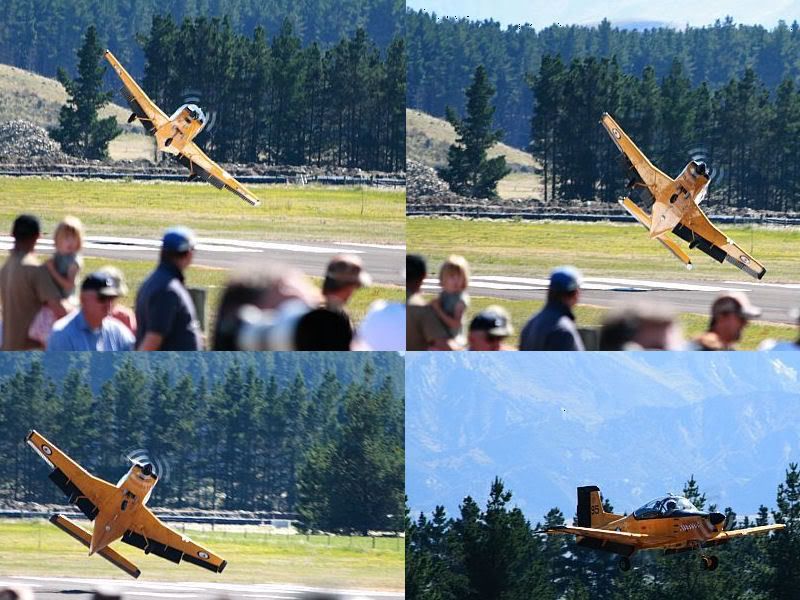
There really isnt such a thing as "prepared" for wake turbulence. You may expect it and try all required for avoiding it but if you hit it its a whole different ball game. It doesnt matter what size aircraft your dealing with the effects of wake turbulence can be huge and almost uncontrollable in certain situations. A good example being the Tiger Moth (small aircraft, right...). the wake turbulence generated by a Tiger Moth can be so severe as to have another Tiger Moth behind with full aileron deflection to stop the rolling and still fairly quickly rolling past 90 degrees, this situation occurs at cruise speeds when you have quite effective controls.
As the speed lowers controls get less effective, flaps down destabilises the aircraft, wake turbulence is actually more noticeable from a preceeding aircraft at slower speeds.
If you get caught out its definately not nice and I imagine that if this is the case from those pictures (which it certainly has the look of) Pete would have had his work cut out for him getting it back on the straight and narrow.
Top effort and my hat is off for fixing a potentially nasty situation
There really isnt such a thing as "prepared" for wake turbulence. You may expect it and try all required for avoiding it but if you hit it its a whole different ball game. It doesnt matter what size aircraft your dealing with the effects of wake turbulence can be huge and almost uncontrollable in certain situations. A good example being the Tiger Moth (small aircraft, right...). the wake turbulence generated by a Tiger Moth can be so severe as to have another Tiger Moth behind with full aileron deflection to stop the rolling and still fairly quickly rolling past 90 degrees, this situation occurs at cruise speeds when you have quite effective controls.
As the speed lowers controls get less effective, flaps down destabilises the aircraft, wake turbulence is actually more noticeable from a preceeding aircraft at slower speeds.
If you get caught out its definately not nice and I imagine that if this is the case from those pictures (which it certainly has the look of) Pete would have had his work cut out for him getting it back on the straight and narrow.
Top effort and my hat is off for fixing a potentially nasty situation
Also mich hat′s mal in meinem Sunny hinter einem Trike bald auf den Rücken gedreht. Bluesky beschreibt das ganz genau richtig. Urplötzlich, sehr stark und konstant. Da kannste machen was Du willst. Da hilft nur warten bis es aufhört zu drehen und dann versuchen die Maschine wieder gerade zu kriegen. Übrigens passiert das selten genau hinter dem Flieger in gleicher Höhe sondern eher etwas drunter. Gruss Stephan
Hi Raptor, if you′ve already made two formation flights with the Tiger Moth, then you should know the manual. What does it say about this situation in the manual?
Stephan2 schrieb: Also mich hat′s mal in meinem Sunny hinter einem Trike bald auf den Rücken gedreht. Bluesky beschreibt das ganz genau richtig. Urplötzlich, sehr stark und konstant. Da kannste machen was Du willst. Da hilft nur warten bis es aufhört zu drehen und dann versuchen die Maschine wieder gerade zu kriegen. Übrigens passiert das selten genau hinter dem Flieger in gleicher Höhe sondern eher etwas drunter. Gruss Stephan
Beides wundert mich eigentlich nicht da Deltaflügel weitaus schlimmer sind was Wirbelschleppen betrifft; die sinken mit rund 300ft/min. ab und breiten sich langsam seitlich aus. Das Schlimmste was man machen kann ist also, bei leicht seitlichem Rückenwind zu dicht hinter einem anderen Flieger anzufliegen, dann ist man ständig drin.
There really isnt such a thing as "prepared" for wake turbulence. You may expect it and try all required for avoiding it but if you hit it its a whole different ball game. It doesnt matter what size aircraft your dealing with the effects of wake turbulence can be huge and almost uncontrollable in certain situations. A good example being the Tiger Moth (small aircraft, right...). the wake turbulence generated by a Tiger Moth can be so severe as to have another Tiger Moth behind with full aileron deflection to stop the rolling and still fairly quickly rolling past 90 degrees, this situation occurs at cruise speeds
kannst du bitte die Quelle nennen? Pls can you tell us the source?
Kostenlos mitmachen
Anmeldung erforderlich
Wie möchtest Du fortfahren?
Medium wird geladen …
Deine Entscheidung
Datenschutz-Einstellungen
Notwendige Funktionen der Community sind immer aktiv. Externe Karten und Videos werden erst geladen, wenn Du sie einmalig freigibst oder hier dauerhaft erlaubst.
Die Einwilligung für Werbung wird getrennt über die von Google bereitgestellte Einwilligungsverwaltung gesteuert.